FOIH Annual Fundraising Event Washington DC Chapter
Monday Nov 18, 2024 5:30 PM EST
Location
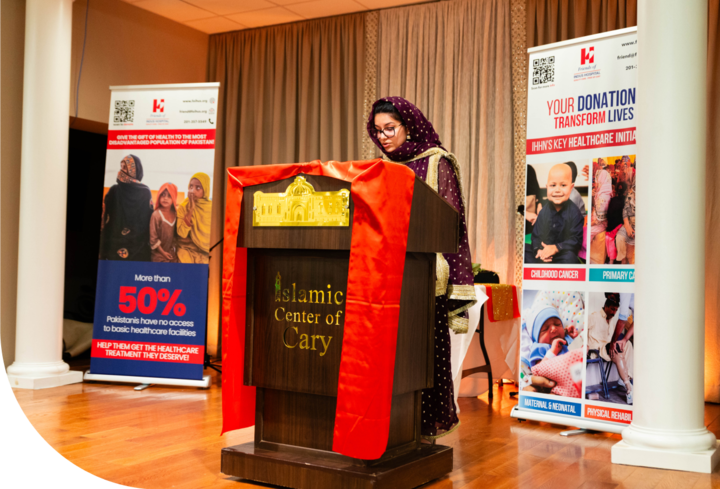
For millions of families, accessing medical treatment can mean choosing between essential healthcare and everyday necessities. When the cost of surgery, medication, or ongoing care becomes unaffordable, even treatable conditions can place an overwhelming burden on patients and their loved ones.
For Muslims looking to fulfill their religious obligations while making a meaningful difference, an important question arises: Can Zakat be used for medical treatment? The answer is yes. Under Islamic guidelines, Zakat can help cover medical expenses for eligible individuals. By supporting a Zakat-eligible charity, donors can help provide essential healthcare to people who might otherwise go without treatment.
Organizations like Friends of Indus Hospital (FOIH) make it possible for donors in the United States to support free medical care for eligible patients in Pakistan through Indus Hospital & Health Network (IHHN).
Zakat is one of the Five Pillars of Islam and an essential obligation for Muslims who meet the required wealth threshold, known as Nisab. Generally calculated at 2.5% of qualifying wealth, Zakat supports those experiencing financial hardship and promotes economic justice within communities.
The Quran identifies eight categories of individuals who may receive Zakat in Surah At-Tawbah (9:60):
Therefore, patients who cannot afford necessary healthcare qualify under the categories of the poor or needy. Depending on their specific circumstances, individuals burdened by qualifying medical debts may also be eligible. This means that Zakat for healthcare can be permissible when the funds are used to support eligible recipients in accordance with Islamic principles.
Yes. Islamic scholars recognize that essential medical care is among the basic needs of individuals experiencing financial hardship.
Depending on the patient’s eligibility and the organization’s approved Zakat guidelines, these contributions may help cover:
However, not every medical expense automatically qualifies for Zakat funding. Eligibility depends on the patient’s financial circumstances, applicable Islamic guidelines, and how the funds are administered. For donors, choosing a healthcare organization with established Zakat eligibility and distribution procedures is an important part of fulfilling this obligation responsibly.
Indus Hospital & Health Network (IHHN) provides completely free, accessible healthcare to all in Pakistan. Through its hospitals and healthcare facilities, the network helps patients access treatment without the financial burden of medical bills.
For individuals considering Indus Hospital Zakat donations, understanding how funds are handled is especially important. IHHN’s Zakat process rests on one core principle: IHHN does not spend Zakat directly. Zakat is first transferred into the ownership of eligible patients and is then applied to their care only under the authority those patients have granted.
This was reviewed and approved by Darul Ifta, Jamia Darul Uloom Karachi, in a fatwa dated 8 August 2017. It has also been certified as Shariah compliant for 2026 by Mufti Muhammad Najeeb Khan, a Shariah Advisor registered with the Securities and Exchange Commission of Pakistan (SECP).
Here is how the process works:
Patients who are not eligible to receive Zakat, including non-Muslim patients, receive the same standard of care, funded through IHHN’s separate donations account.
These safeguards help donors understand how their contributions reach eligible patients while respecting the religious requirements associated with Zakat.
For Muslims living in the United States, supporting eligible patients overseas can be a meaningful way to fulfill their Zakat obligations.
Friends of Indus Hospital (FOIH) is a U.S.-based 501(c)(3) nonprofit organization that raises funds and awareness to support the healthcare mission of Indus Hospital & Health Network in Pakistan. FOIH and IHHN are separate organizations with complementary roles. FOIH facilitates charitable giving and fundraising in the United States, while IHHN operates the hospitals and healthcare services that provide treatment to patients in Pakistan.
Through FOIH, American donors can contribute to Zakat-supported medical care while benefiting from a U.S.-based donation process.
Support free medical treatment. Your Zakat helps eligible patients access necessary healthcare without the burden of treatment costs.
Give through an established U.S. nonprofit. FOIH is registered as a 501(c)(3) charitable organization, allowing eligible U.S. donors to receive tax-deductible donation receipts. Support Shariah-guided distribution. IHHN follows established patient eligibility assessments and Zakat accounting procedures to direct contributions toward qualifying recipients.
Donate securely from the United States. FOIH accepts online donations in U.S. dollars, making it convenient for donors to contribute toward essential healthcare.
Whether your contribution supports a patient requiring surgery or someone facing a serious illness, Zakat can help remove financial barriers to necessary medical treatment.
Donating Zakat through FOIH is a straightforward process for U.S.-based supporters.
Step 1: Calculate your Zakat. Determine your qualifying wealth, applicable deductions, and whether you meet the Nisab threshold. For many eligible Muslims, the annual obligation is 2.5% of qualifying net wealth.
Step 2: Visit the FOIH Zakat page. Explore the organization’s approach to Zakat giving and learn how donations support eligible patients through IHHN.
Step 3: Select the Zakat donation option. Follow the designated donation process, enter your contribution amount, and complete your donation securely.
Step 4: Keep your donation receipt. FOIH provides U.S. donors with a receipt for their records. Any applicable tax deduction depends on individual circumstances and U.S. tax rules.
Can Zakat be used for medical treatment?
Yes. Zakat can be used to support necessary medical treatment for individuals who qualify under Islamic eligibility guidelines. This may include surgery, medication, and other essential healthcare expenses for financially disadvantaged patients.
Is Indus Hospital a Zakat eligible charity?
Indus Hospital & Health Network operates a Zakat distribution program that supports eligible patients under guidelines established by its Shariah supervisory and Zakat committees. U.S. donors can contribute to this work through Friends of Indus Hospital.
Can I donate Zakat to a hospital instead of an individual?
Yes, Zakat may be given through a hospital or charitable organization that properly distributes funds to eligible recipients. Donors should confirm that the organization follows appropriate Islamic guidelines for identifying beneficiaries and administering Zakat.
Can Zakat be donated to patients outside the United States?
Yes. Zakat can support eligible recipients in other countries, subject to applicable Islamic guidance. Through FOIH, donors in the United States can help fund medical treatment for qualifying patients in Pakistan.
Are Zakat donations to FOIH tax-deductible?
FOIH is a registered U.S. 501(c)(3) nonprofit organization, and qualifying contributions may be tax-deductible under U.S. law. Donors should consult a qualified tax professional regarding their individual circumstances.
For patients who cannot afford essential medical treatment, access to healthcare can make a life-changing difference.
Zakat offers Muslims an opportunity to fulfill a religious obligation while helping individuals and families facing serious financial and medical challenges.
Through Friends of Indus Hospital, donors in the United States can support Indus Hospital & Health Network’s mission of providing quality healthcare completely free of cost to underserved communities in Pakistan.
Your Zakat can help make necessary medical care accessible to someone who needs it most.
Give Your Zakat Today and help bring compassionate healthcare to eligible patients in need.

Embark on a meaningful journey by getting involved in our mission to provide quality healthcare for all. Your involvement can make a significant difference in the lives of those in need. Here’s how you can be a catalyst for change.


Monday Nov 18, 2024 5:30 PM EST
Location

we have sent you an email with confirmation and QR code.


