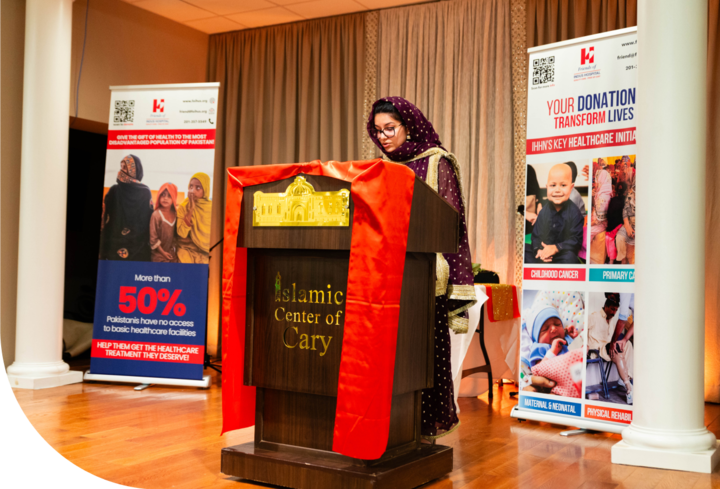
FOIH Annual Fundraising Event Washington DC Chapter
Monday Nov 18, 2024 5:30 PM EST
Location

For Muslims living in the United States, Zakat is an important religious obligation and an opportunity to support those in need. But when tax season approaches, many donors have a practical question: Is Zakat tax deductible in the United States? The short answer is yes.
Zakat donations may qualify for a federal charitable tax deduction when given through an eligible nonprofit organization and when applicable IRS requirements are met. Understanding how Zakat and U.S. tax laws work together can help you make informed giving decisions, maintain proper donation records, and support causes that reflect your values.
Through Friends of Indus Hospital (FOIH), Muslim donors in America can fulfill their Zakat obligations while supporting free essential medical treatment for patients in Pakistan.
Yes, Zakat can be tax deductible in the United States when donated to an eligible charitable organization, such as a qualifying 501(c)(3) nonprofit. However, it is important to understand that fulfilling your Zakat obligation and qualifying for a U.S. tax deduction are two separate matters.
Under Islamic principles, Zakat is one of the Five Pillars of Islam. Eligible Muslims are generally required to contribute 2.5% of their qualifying wealth annually to recipients who meet established religious guidelines. Under U.S. tax law, charitable contributions may qualify for deductions when they are made to eligible organizations and satisfy IRS requirements.
For example, donating Zakat directly to a financially disadvantaged individual may fulfill your religious obligation, but the IRS generally does not allow deductions for gifts made directly to individuals. By contrast, a Zakat donation made through an eligible nonprofit may qualify for a federal tax deduction, depending on your tax circumstances.
Beginning in the 2026 tax year, updated federal charitable contribution rules affect how individuals can claim deductions. One important change is that eligible taxpayers who take the standard deduction may now claim deductions for certain qualifying cash donations.
The general limits for 2026 are:
This deduction applies only to cash gifts made during the tax year. Noncash gifts such as stock or other property, contributions to donor-advised funds or supporting organizations, and prior-year carryovers do not qualify.
For taxpayers who itemize deductions, a separate rule applies: only charitable contributions that exceed 0.5% of their adjusted gross income (AGI) are deductible, subject to other applicable limitations.
These changes may provide additional tax benefits for eligible Muslim donors who contribute Zakat through qualified organizations. However, the amount of Zakat you owe under Islamic principles does not change based on whether you receive a tax deduction.
Donors should review the latest IRS charitable contribution guidance or consult a qualified tax professional when preparing their returns.
Before making a Zakat donation, it is important to confirm that the organization you are supporting is eligible to receive tax-deductible contributions.
The IRS provides a free online resource called the Tax Exempt Organization Search, which allows donors to review nonprofit eligibility and tax-exempt status.
To verify a charity:
Some eligible religious organizations may not appear in the database, so donors can also request documentation directly from the organization.
Is Friends of Indus Hospital a 501(c)(3) Organization?
Yes. Friends of Indus Hospital, Inc. is a U.S.-registered 501(c)(3) nonprofit organization dedicated to supporting Indus Hospital & Health Network (IHHN) in Pakistan.
FOIH raises funds and awareness throughout the United States to help IHHN provide quality medical care completely free of cost to anyone who needs it in Pakistan. FOIH’s federal tax identification number is 20-4751162, which donors can use when reviewing the organization’s nonprofit information.
Through FOIH, eligible Zakat contributions support medical treatment for qualifying patients in accordance with IHHN’s established Shariah guidelines.
If you are wondering how to give Zakat in the USA, the process begins with calculating your obligation and choosing an appropriate recipient or charitable organization.
Step 1: Calculate Your Zakat Obligation
Zakat is generally calculated as 2.5% of qualifying wealth held for one lunar year, provided the applicable Nisab threshold and other religious requirements are met.
Qualifying assets may include cash, savings, gold, silver, and certain investments.
Because Zakat calculations can vary depending on the type of assets and applicable Islamic guidance, consider consulting a qualified scholar if you are uncertain about your obligation.
Step 2: Choose a Zakat-Eligible Charity
Once you determine how much Zakat you owe, select an organization that follows appropriate Islamic guidelines for distributing contributions.
When evaluating a charity, consider whether it identifies eligible recipients, maintains clear donation records, and explains how Zakat funds are allocated.
Friends of Indus Hospital supports IHHN’s free healthcare mission, with Zakat donations directed toward patients who meet established eligibility requirements.
Step 3: Make Your Zakat Donation
Donors can contribute online through FOIH’s designated Zakat appeal.
When completing your donation, select the appropriate Zakat designation to distinguish your religious contribution from general charitable giving.
Give Zakat Through Friends of Indus Hospital
Step 4: Save Your Donation Receipt
After donating, keep your confirmation and receipt for your personal records.
These documents can help substantiate your charitable contribution if you qualify to claim a deduction when filing your federal income taxes.
Yes. Maintaining appropriate documentation is an important part of claiming charitable deductions.
For monetary donations of any amount, the IRS generally requires a bank record or written communication from the charity showing the organization’s name, donation amount, and date.
For an individual contribution of $250 or more, donors generally must obtain a written acknowledgment from the receiving organization.
This acknowledgment should include:
Friends of Indus Hospital provides an official U.S. donation receipt by email after a successful online contribution, helping donors maintain records for tax purposes.
Remember that receiving a donation receipt does not automatically guarantee a deduction. Your eligibility depends on applicable IRS rules and your individual tax situation.
Generally, no. Under IRS rules, donations made directly to specific individuals are not deductible charitable contributions.
This distinction is especially important for Muslim donors who provide Zakat directly to family members, friends, or individuals experiencing financial hardship.
For example, you may give Zakat directly to an eligible person who cannot afford medical treatment. Although the contribution may fulfill your Islamic obligation, it generally will not qualify for a federal charitable tax deduction.
Donating through an eligible charitable organization provides a different option.
A qualified nonprofit can receive charitable contributions, maintain appropriate donation records, and distribute assistance according to its established mission.
For donors interested in supporting healthcare, FOIH offers a way to direct Zakat toward eligible patients receiving free treatment through IHHN.
Many U.S. employers offer charitable matching gift programs that allow employees to increase the impact of their donations.
Under these programs, an employer may contribute an additional amount to an eligible nonprofit after an employee makes a qualifying donation.
For example, if you donate $500 and your employer offers a dollar-for-dollar match, the organization could receive a total of $1,000.
However, there are important distinctions to keep in mind.
Your personal Zakat contribution and your employer’s matching gift are not automatically treated the same under Islamic guidelines.
An employer’s contribution generally does not count toward your personal Zakat obligation simply because it matches your donation. Additionally, the employer’s matching contribution is not considered an additional personal charitable deduction for you.
Before requesting a match, confirm whether your employer’s program supports the selected organization and whether the matching funds can be designated for Zakat-eligible purposes.
FOIH has identified matching gifts among its charitable giving options. Donors interested in participating can contact the organization to confirm the current process and available opportunities.
For donors with investments, charitable stock donations may offer another way to support a nonprofit organization.
Under certain circumstances, donating appreciated securities directly to a qualified charity may provide tax advantages compared with selling the investments and donating the proceeds.
However, stock donations are subject to different IRS rules than cash contributions, including valuation, holding-period, and deduction limitations.
There is also an important religious consideration: Donating investments to charity does not automatically mean the contribution fulfills your Zakat obligation.
Donors should confirm the applicable Islamic requirements, including how the contribution is valued and whether the receiving organization can appropriately designate it as Zakat.
Friends of Indus Hospital has included stock donations among its giving options. Donors interested in contributing securities should contact FOIH for current transfer instructions and consult appropriate tax and Islamic advisors before proceeding.
To explore available donation methods, visit FOIH’s Ways to Donate.
Every year, families across Pakistan face significant barriers to accessing essential healthcare. For individuals already experiencing financial hardship, the cost of medical treatment can make necessary care difficult or impossible to obtain.
Indus Hospital & Health Network works to remove those barriers by providing healthcare completely free of cost.
As a U.S.-based nonprofit, Friends of Indus Hospital helps connect American donors with this mission through fundraising and charitable giving opportunities.
When you give Zakat through FOIH, your contribution can help:
IHHN follows established Shariah guidelines to determine patient eligibility, with welfare officers assessing financial circumstances and separate accounting procedures supporting the appropriate allocation of Zakat funds.
For American donors, FOIH also provides the convenience of giving through a registered U.S. nonprofit while maintaining donation documentation for tax purposes.
Is Zakat tax deductible in the USA?
Yes. Zakat may qualify as a federal charitable tax deduction when donated to an eligible nonprofit organization and when applicable IRS requirements are met. Your individual deduction depends on factors such as your filing status, contribution type, and other tax circumstances.
How do I pay Zakat in America?
To pay Zakat in America, calculate your religious obligation, choose an eligible recipient or trusted Zakat charity, and make your contribution with the appropriate intention. You can donate online through a U.S.-registered nonprofit such as Friends of Indus Hospital.
Can I deduct Zakat if I take the standard deduction?
Beginning in the 2026 tax year, eligible taxpayers who do not itemize may deduct certain qualifying cash charitable contributions, generally up to $1,000 for individual filers or $2,000 for married couples filing jointly.
Are Zakat donations made overseas tax deductible?
Direct contributions to foreign organizations generally do not qualify for U.S. federal charitable deductions, subject to limited exceptions. However, donations to an eligible U.S. nonprofit that supports charitable programs overseas may qualify when the organization maintains the necessary control and discretion over its funds.
Can my employer match my Zakat donation?
Potentially. Some employers offer matching gift programs for donations to eligible nonprofit organizations. However, the employer’s matching contribution generally does not count toward your personal Zakat obligation or provide an additional personal tax deduction.
Is Zakat different from Sadaqah for tax purposes?
Zakat is an obligatory form of Islamic giving, while Sadaqah is generally voluntary. For U.S. tax purposes, either may qualify as a charitable contribution when given to an eligible organization and when the donation satisfies applicable IRS requirements.
When should I make my Zakat donation for a 2026 tax deduction?
To potentially claim a qualifying contribution on your 2026 federal income tax return, the donation generally must be completed by December 31, 2026. Your religious Zakat due date may differ because it follows Islamic requirements rather than the U.S. calendar tax year.
Understanding how to pay Zakat in America involves more than knowing how much to give. It also means choosing eligible recipients, understanding your donation options, and keeping the appropriate records.
While a charitable tax deduction may offer a financial benefit, the purpose of Zakat remains rooted in faith, compassion, and supporting those in need.
Through Friends of Indus Hospital, donors across the United States can fulfill their Zakat obligations while helping underserved patients in Pakistan access essential medical care.
Your Zakat can help remove financial barriers to healthcare and bring hope to individuals and families who need it most.
Donate Your Zakat Today and support the mission of providing quality healthcare completely free of cost.

Embark on a meaningful journey by getting involved in our mission to provide quality healthcare for all. Your involvement can make a significant difference in the lives of those in need. Here’s how you can be a catalyst for change.


Monday Nov 18, 2024 5:30 PM EST
Location

we have sent you an email with confirmation and QR code.


