FOIH Annual Fundraising Event Washington DC Chapter
Monday Nov 18, 2024 5:30 PM EST
Location

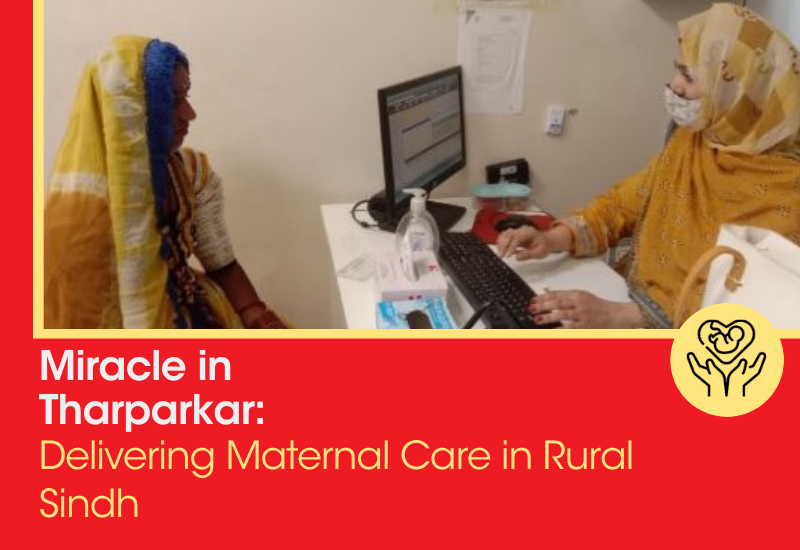
In a sun-scorched village in Tharparkar, Shirin carried more than just a pregnancy; she carried fear, grief, and the fragile hope of bringing a baby safely into the world. With two previous pregnancy losses and only one living child, every step of this journey was heavy with uncertainty.
In Tharparkar, where the nearest hospitals are hours away over rough terrain, many women still gave birth at home with only their close relatives with them. Maternal mortality wasn’t just a statistic—it was a lived reality that touched every family. But fortunately for Shirin, help came her way.
A community health worker, with Indus Hospital & Health Network, had been making her rounds through the dusty lanes of Shirin’s neighborhood, when she noticed the woman struggling with obvious discomfort. In rural areas like Tharparkar, these CHWs serve as lifelines—trained local women who bridge the gap between isolated communities and formal healthcare. They understand the cultural barriers, the economic constraints, and the deep-rooted fears that often prevent women from seeking care.
The CHW probed Shirin about her past, and recognized the urgent condition she was in. She brought her to Indus Hospital & Health Network’s Thar Foundation Primary Healthcare Center in Islamkot. For Shirin, who had never been to a proper medical facility during any of her pregnancies, the journey felt monumental.
At the healthcare center, she was received by a midwife whose gentleness and patient listening created a space where Shirin finally felt safe to voice her deepest fears. The midwife, trained to recognize the complex needs of high-risk pregnancies, quickly identified the warning signs: Shirin’s history of complications, combined with critically low platelet levels, painted a picture that demanded immediate specialized intervention.
In rural Pakistan, where maternal mortality rates remain alarmingly high—particularly in regions like Sindh—such early identification can mean the difference between life and death. Many women like Shirin suffer from preventable complications simply because they lack access to skilled birth attendants and emergency obstetric care.
The decision was made swiftly but carefully: Shirin needed to be transferred to IHHN’s hospital in Badin, where she could receive the specialized care her condition required. She was transported safely by IHHN’s team to build her safe path forward.
At Badin, surrounded by a team of skilled doctors and nurses who understood both the medical complexities and the emotional weight of her journey, Shirin felt something she hadn’t experienced in years: genuine confidence that she and her baby would survive this.
A cesarean section was performed with precision and care. She gave birth to a healthy baby girl—a daughter who would grow up in a world where her mother’s courage had helped pave the way for better maternal care in their community.
Shirin’s story reflects the broader struggle of rural women across Pakistan, where geographic isolation, poverty, and limited healthcare infrastructure create barriers that shouldn’t exist in modern times. Her journey from fear to joy illuminates what becomes possible when community health workers, primary healthcare centers, and specialized medical facilities work together as a coordinated system of care.
In regions like Tharparkar, changing outcomes requires building trust, training community health workers, and ensuring that no woman has to choose between her life and her baby’s. Shirin’s story is a testament to what becomes possible when we insist that every woman deserves skilled care during the most vulnerable moments of her life.
IHHN continues to see women like Shirin—women carrying not just pregnancies, but the weight of fear, the shadow of previous losses, and the desperate hope for a different outcome. They stand with each one, understanding that the fight for safe motherhood is also a fight for the future of entire communities.
Embark on a meaningful journey by getting involved in our mission to provide quality healthcare for all. Your involvement can make a significant difference in the lives of those in need. Here’s how you can be a catalyst for change.


Monday Nov 18, 2024 5:30 PM EST
Location

we have sent you an email with confirmation and QR code.


